


Updated . Published .
SI1 vs VS2 Diamonds: Which Clarity Grade Should You Buy?
VS2 is one clarity grade above SI1. Most VS2 diamonds look clean to the naked eye, while many SI1 diamonds show an inclusion. In November 2026, StoneAlgo's price calculator put a 1 carat round G SI1 about 20% below a G VS2. Buy VS2 for less risk, or a checked SI1 for value.
- SI1 and VS2 are neighbors on GIA's 11-grade clarity scale. VS2 is the sixth grade and SI1 the seventh.
- Most VS2 diamonds are eye clean. SI1 diamonds vary, so each one needs a check.
- SI1 costs less, but the eye clean SI1 diamonds often cost close to a VS2.
- Online, we suggest starting at VS2. In a store, where you can see the stone, an SI1 is easier to judge.
- For both grades, avoid surface-reaching inclusions and the report comment "clarity grade is based on clouds that are not shown."
Search VS2 diamonds Search SI1 diamonds Check a diamond for free
What do SI1 and VS2 clarity mean?
Clarity grades describe the inclusions inside a diamond and the blemishes on its surface. Inclusions are features such as crystals, feathers, clouds and pinpoints.
On GIA's clarity scale, VS2 means very slightly included 2. Its inclusions are minor and somewhat easy for a skilled grader to see at 10x. SI1 means slightly included 1. Its inclusions are noticeable at 10x. Read the full guides to VS2 clarity and SI1 clarity, or see all 11 grades in our diamond clarity chart.
SI1 vs VS2: how do the two grades compare?
| VS2 | SI1 | |
|---|---|---|
| Place on GIA's scale | 6th of 11 | 7th of 11 |
| What a grader sees at 10x | Minor inclusions, somewhat easy to find | Noticeable inclusions, easy to find |
| Eye clean? | Usually | Sometimes |
| Fair Price Estimate, 1 carat round G, November 2026 | $3,735 | $2,999 |
| Easiest way to buy | Online, from photos and video | In person, or with a close photo check |
| Best for | Buyers who want low risk | Buyers who will check each stone |


Left: a VS2 diamond. Right: an SI1 diamond. Both photos are magnified many times. Click a photo to search diamonds of that grade.
Are SI1 and VS2 diamonds eye clean?
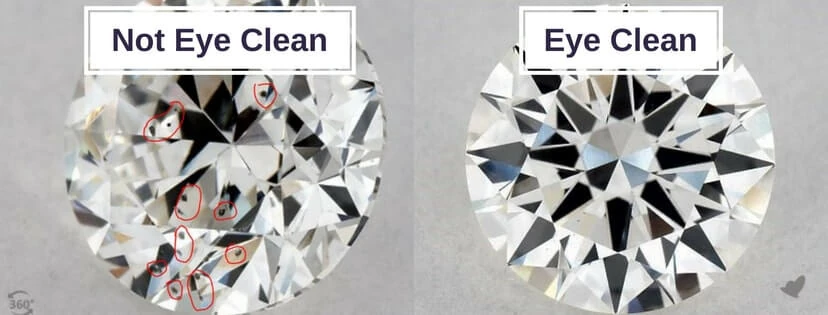
Most VS2 diamonds are. SI1 diamonds vary a lot. Three things decide if you can see an inclusion:
- Location. The table (the large flat facet on top) is the worst place for an inclusion. Near the edge, a prong may cover it.
- Color. Dark inclusions stand out. White or clear ones are much harder to see.
- Type. A large cloud can make a diamond look hazy even when no single inclusion stands out.
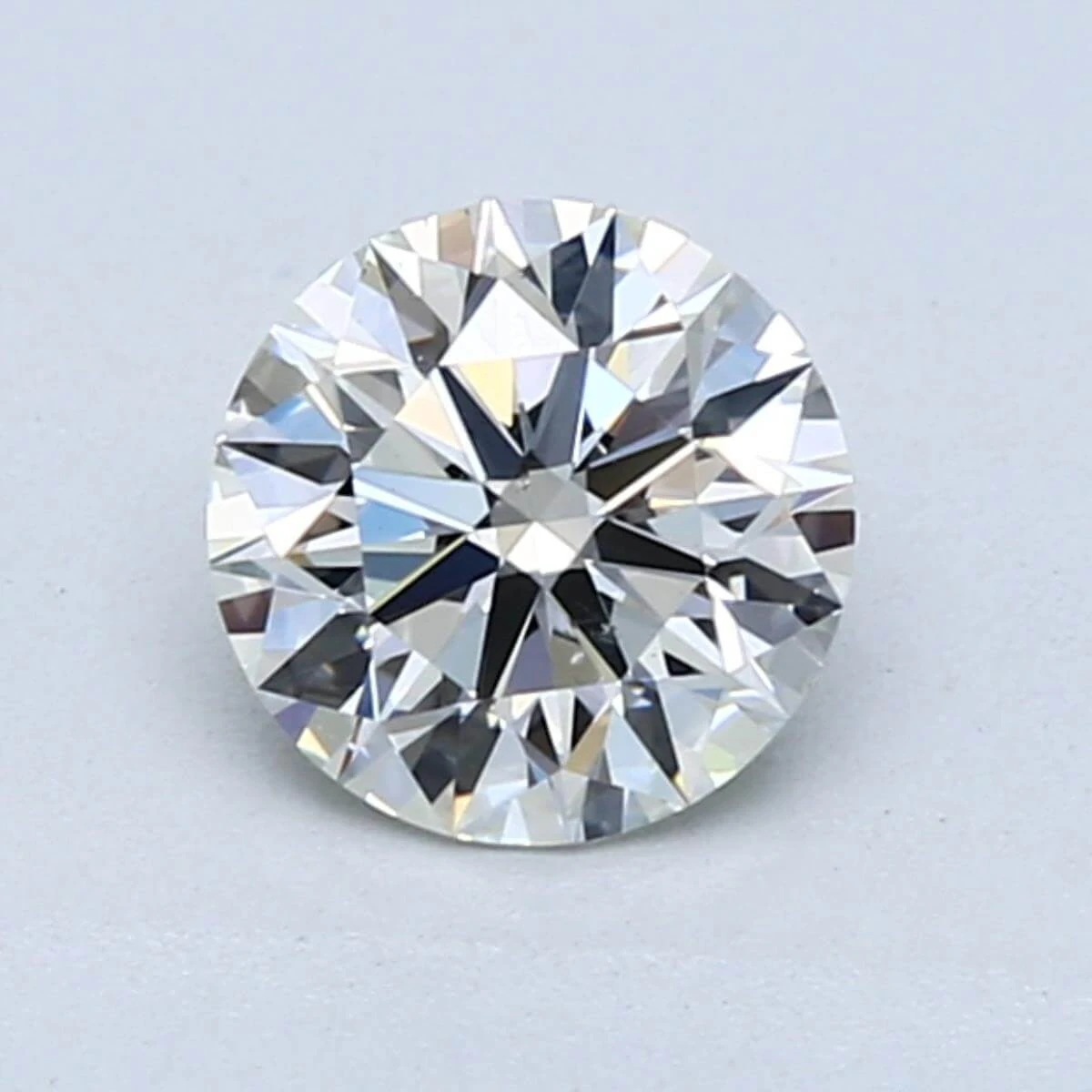
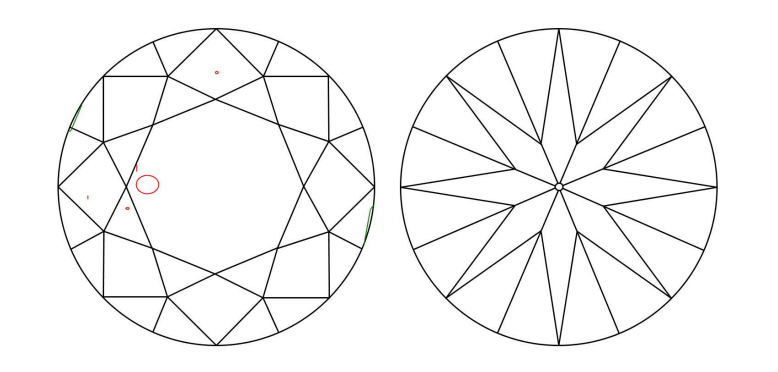
Here is an SI1 that we consider eye clean. It has a crystal under the center of the table, and its GIA report notes pinpoints and clouds that are not shown on the plot. The crystal is light in color, so it does not stand out face up.
See more examples in our guide to eye clean diamonds.
What is the price difference between SI1 and VS2?
On November 14, 2026, StoneAlgo's diamond price calculator gave these Fair Price Estimates for a 1 carat round natural diamond, G color:
Prices change daily, and the gap changes with carat weight, color and shape. Click either link for today's estimate.
A single estimate hides a wide spread. The calculator's estimate range ran from $1,931 to $5,719 for the G VS2 and from $1,489 to $4,660 for the G SI1. Within SI1, two diamonds with the same carat, color and cut can differ a lot in price. The cheaper one often has the more visible inclusion. So an eye clean SI1 often costs close to a VS2, and the cheapest VS2 diamonds may not be eye clean.
Should you buy an SI1 or a VS2?
Buy a VS2 if you shop online, want little risk, or choose an emerald or asscher cut, which shows inclusions more. VS2 is where we suggest you start.
Buy an SI1 if you can see the stone in person, or if you will study photos, video and the report. Store prices are often higher than online prices, so check the fair price before you pay.
Whichever you choose, follow these steps:
- Search a clarity range. Search from your lowest grade up to VS1 or VVS2. Now and then a higher grade is priced close to a lower one.
- Filter for a strong cut. For round diamonds, look for a high StoneAlgo cut score. Strong sparkle helps hide small inclusions.
- Read the report. GIA lists inclusions in order of importance to the grade. Skip cavities, chips and the clouds comment. Learn how to read a GIA report.
- Look at real size. Shrink the photo on your screen to about the size of a fingernail. That is closer to what you will see in person.
- Compare finalists. Put them side by side in the diamond comparison tool.
Frequently asked questions
Can a jeweler hide an inclusion?
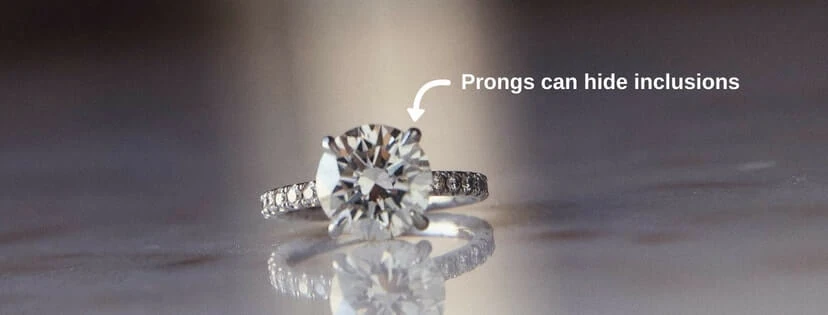
Sometimes. When a jeweler sets a diamond, they choose where the prongs sit. An inclusion near the outer edge can sit under a prong. An inclusion in the center of the table cannot be hidden this way. Thin, white, hair-like inclusions near the bottom or side of the diamond are also hard to see without magnification.
Is VS2 better than SI1?
Yes, by one grade. VS2 diamonds are eye clean more often. An eye clean SI1 can look as good, but it takes more work to find.
Can you tell the difference between SI1 and VS2?
If the SI1 is eye clean, you will not see a difference with the naked eye. If it has a dark inclusion under the table, you will.
How much cheaper is SI1 than VS2?
For a 1 carat round G diamond, about 20% in StoneAlgo's November 2026 estimates. Use the price calculator for your size and color.
Which clarity is best for an engagement ring?
The lowest grade that is eye clean for your stone. For most buyers that is VS2, or a checked SI1. See more ways to save money on an engagement ring.
More clarity guides

© 2026 StoneAlgo, Inc. All rights reserved.