


Updated . Published .
Princess Cut Diamond Guide: Ideal Depth, Table and Ratio
Short answer: a princess cut diamond is a square brilliant cut with four pointed corners. For a bright, square princess, choose a length to width ratio of 1.00 to 1.05, a table of 60% to 69%, Excellent polish and symmetry, G or H color, an eye clean VS2 and a setting that covers the corners.
- Princess cuts cost far less than rounds. In November 2026, a 1 carat natural princess averaged $2,815 on StoneAlgo, 39% less than a 1 carat round.
- The pointed corners can chip, so pick prongs or a bezel that protect them.
- GIA gives no overall cut grade to princess cuts. Judge the proportions yourself.
- A princess looks a little smaller per carat than a round, oval or cushion.
- Most princess cuts have a table of 60% to 69%. The most common depth is 72.7%.
What is a princess cut diamond?
A princess cut is a square (sometimes rectangular) diamond with pointed corners and a modified brilliant facet pattern. The brilliant facets give it a bright, "crushed ice" sparkle. It is one of the newest classic shapes: GIA notes it was first developed in 1979 (GIA's princess cut guide).
Princess is the seventh most popular shape in StoneAlgo's shopper data. Round, oval, cushion, emerald, radiant and pear are more popular.
Princess cut pros and cons
| Pros | Cons |
|---|---|
| A clean, modern square shape | Pointed corners can chip without protection |
| Bright brilliant sparkle | Looks smaller per carat than a round or oval |
| Costs much less than a round of the same weight | No GIA cut grade, so you judge the cut yourself |
Diamond is the hardest natural material, but a hard knock on a thin, pointed corner can still chip it. GIA suggests V shaped prongs, split prongs or a bezel to protect princess corners.
Princess vs. radiant vs. Asscher vs. emerald cut
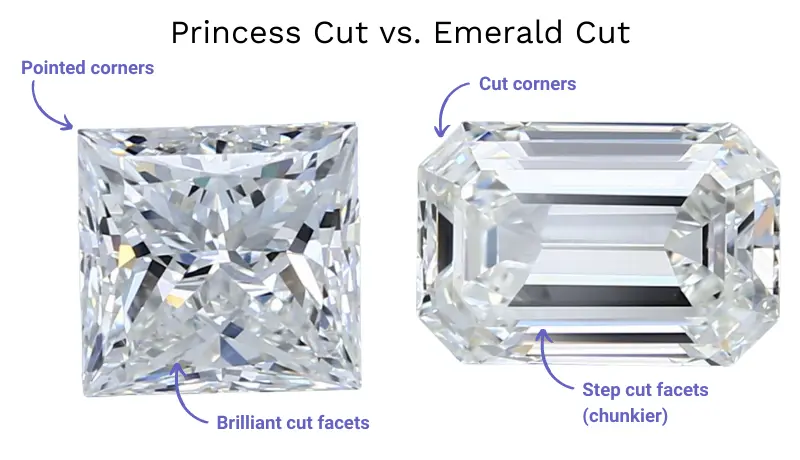
Four popular shapes are square or rectangular. They differ in facet style (brilliant or step cut), outline and corners.
| Shape | Facet style | Outline | Corners |
|---|---|---|---|
| Princess | Brilliant | Square, sometimes rectangular | Pointed |
| Radiant | Step cut crown, brilliant pavilion | Square or rectangular | Cut corners |
| Asscher | Step cut | Square | Cut corners |
| Emerald | Step cut | Rectangular | Cut corners |
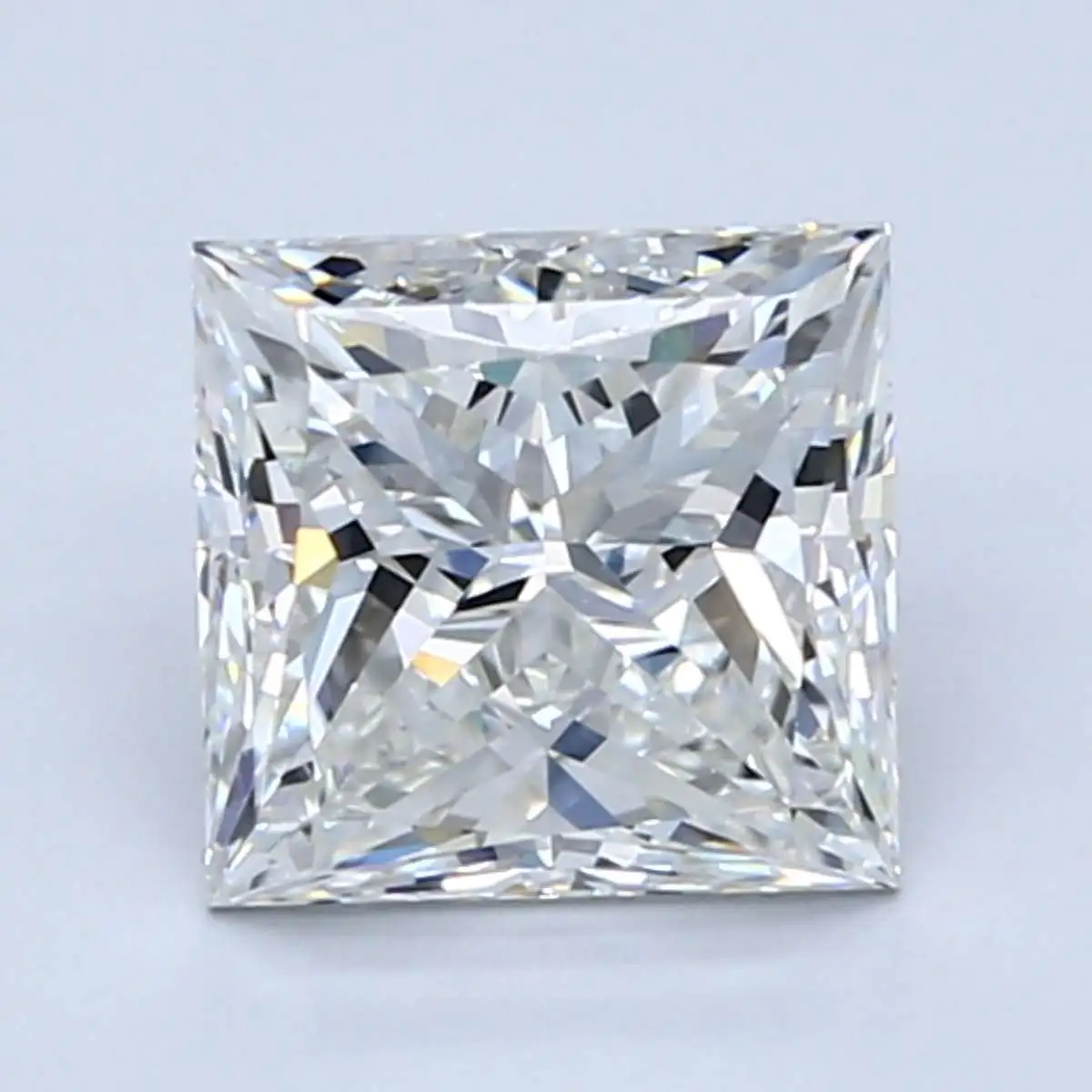
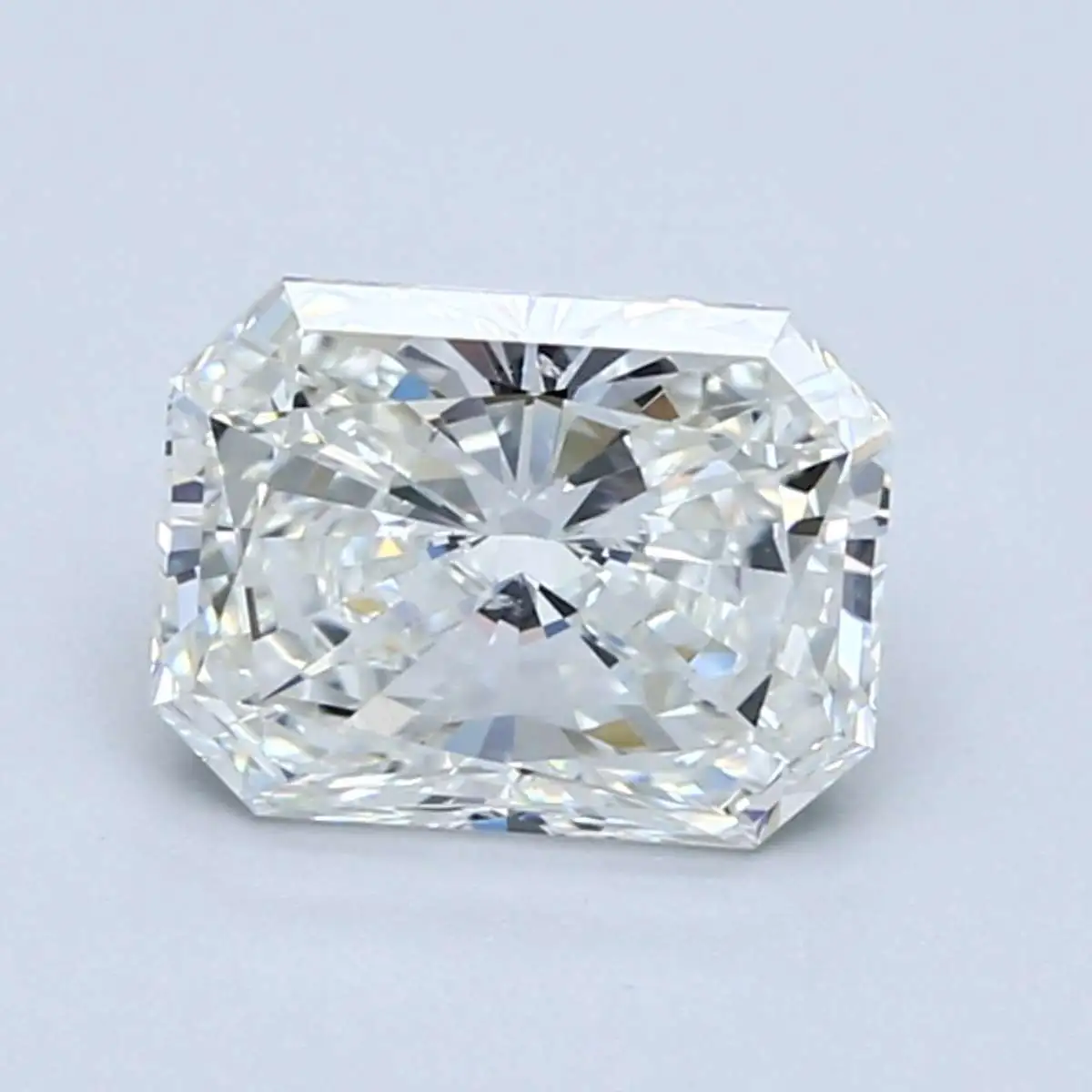
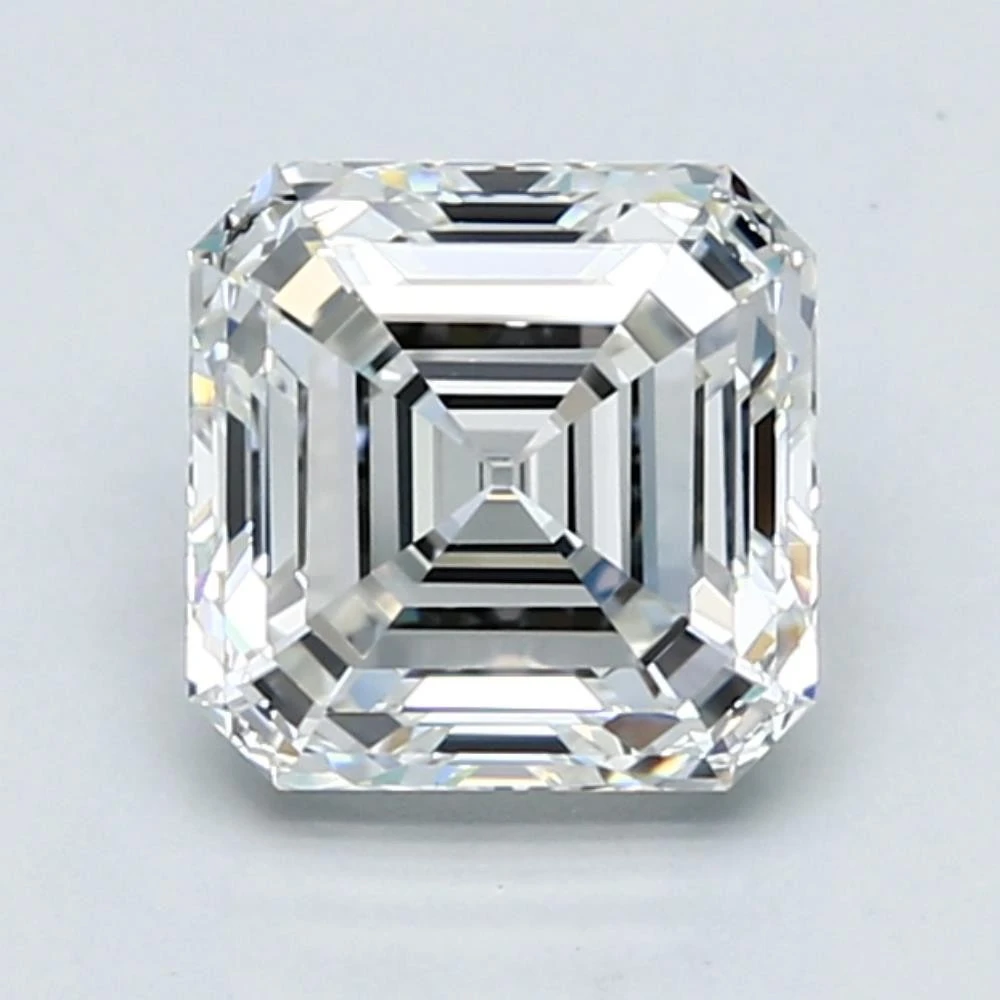
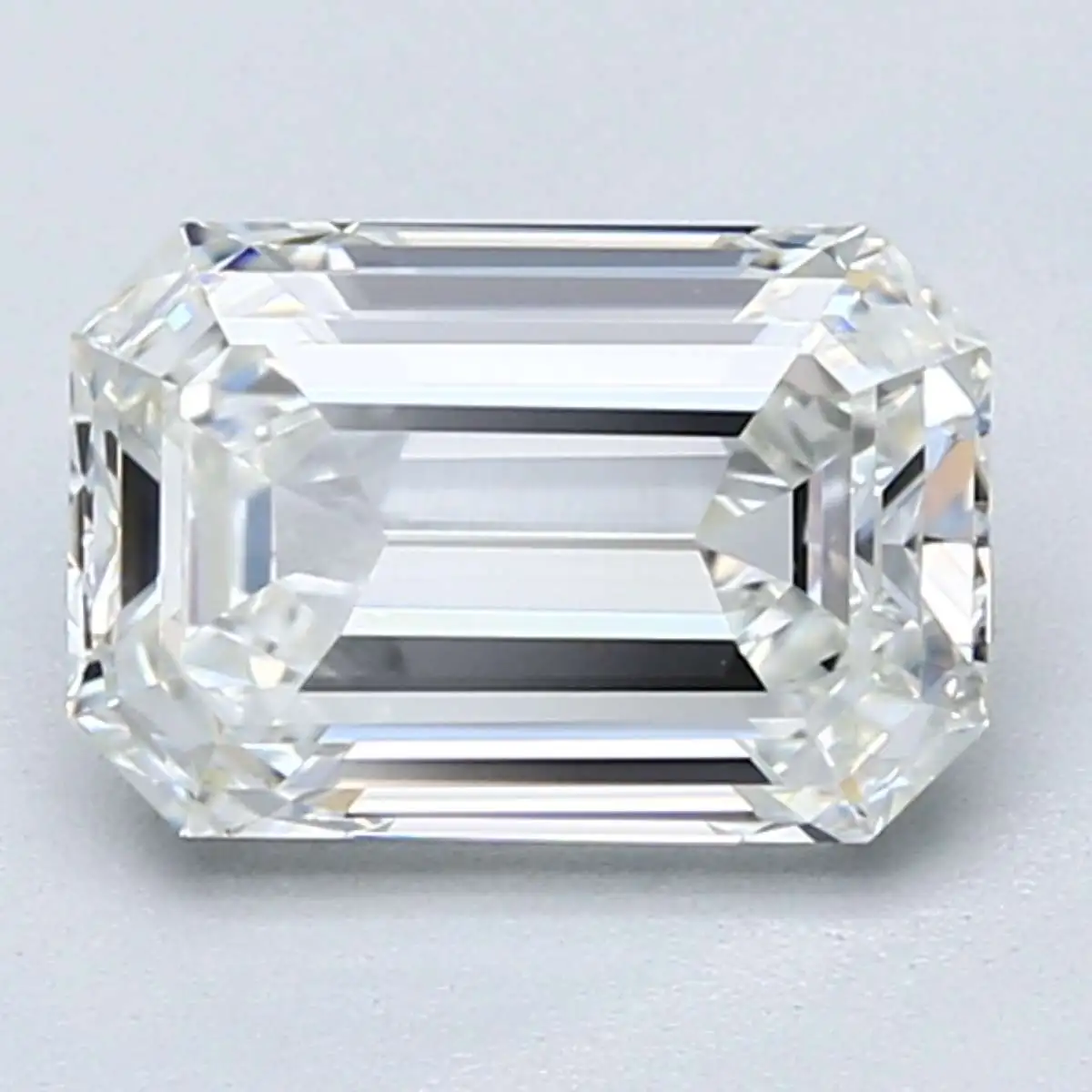
The princess and radiant have brilliant facets, so they sparkle more. The two step cuts (Asscher and emerald) show broad flashes of light and a "hall of mirrors" look.
What are the ideal proportions for a princess cut?
GIA assigns an overall cut grade to round brilliants only. For a princess, the report gives polish and symmetry grades and the measurements. Choose Excellent polish and symmetry. Then use the ranges below, taken from the princess cuts in StoneAlgo's database.
| Measurement | Where most princess cuts fall | Most common value |
|---|---|---|
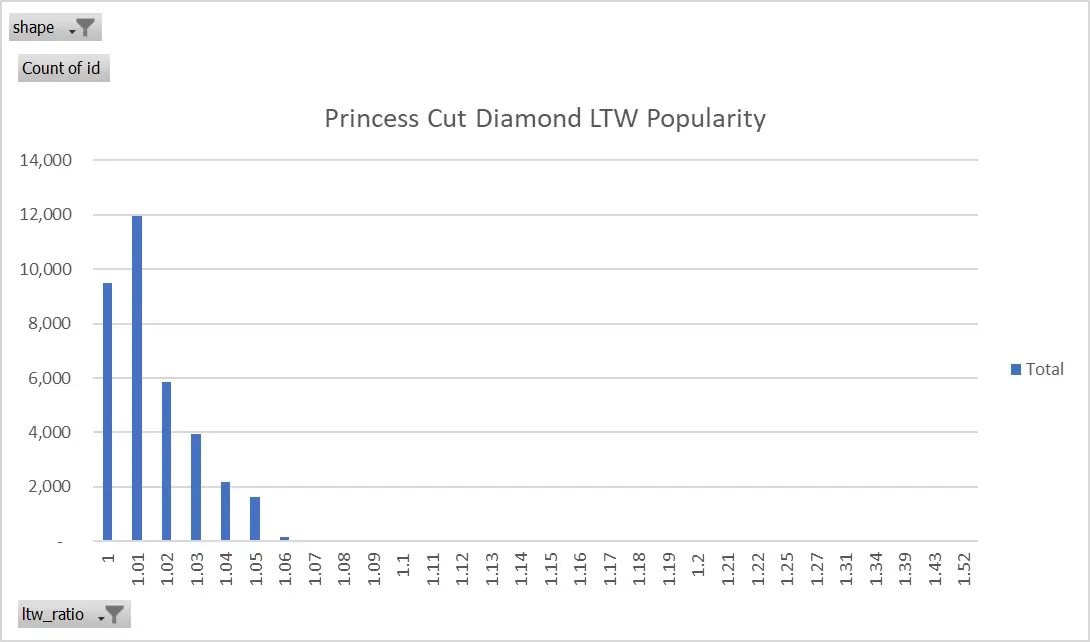
| Length to width ratio (square) | 1.00 to 1.05 | 1.00 |
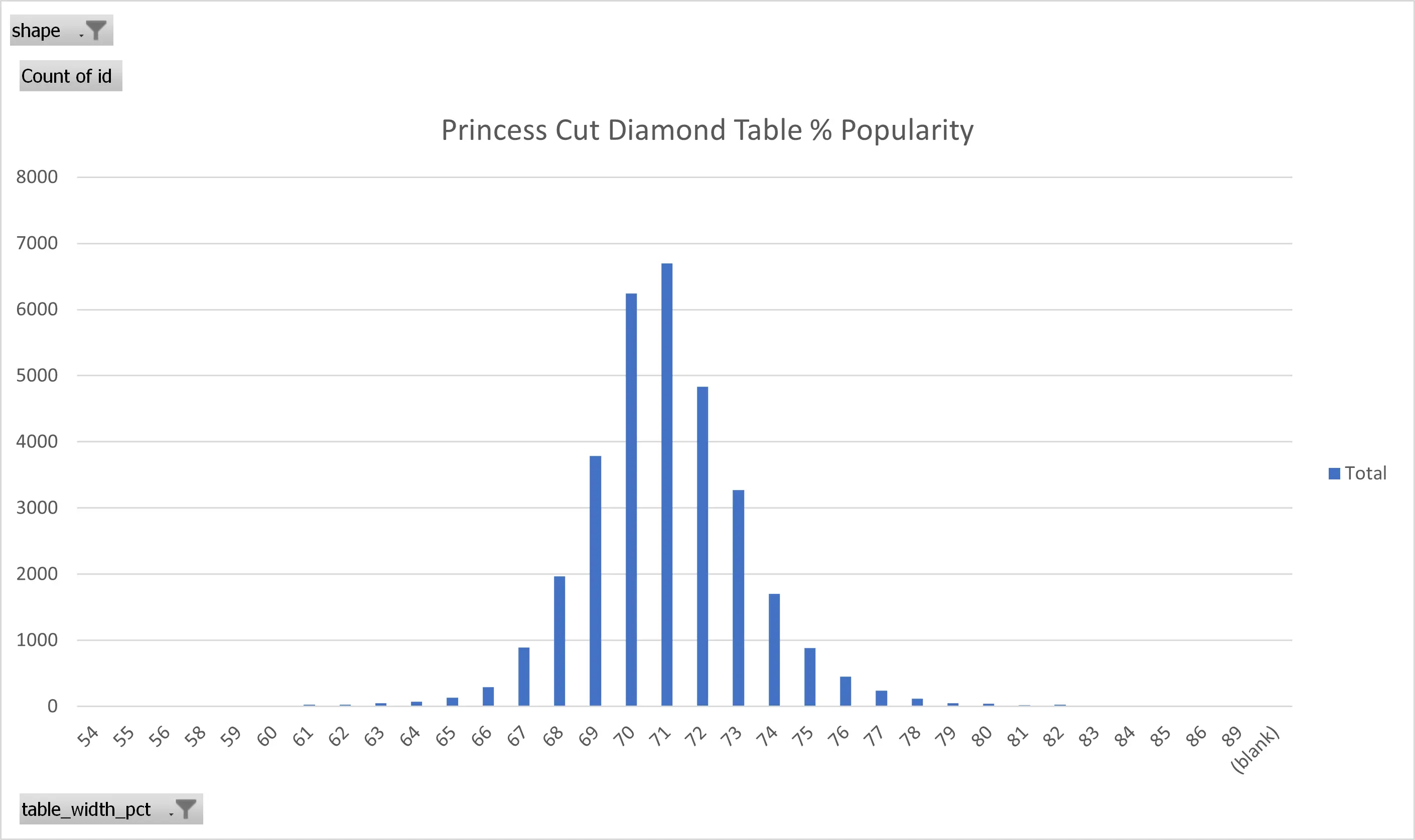
| Table percentage | 60% to 69% | 64% and 65% |
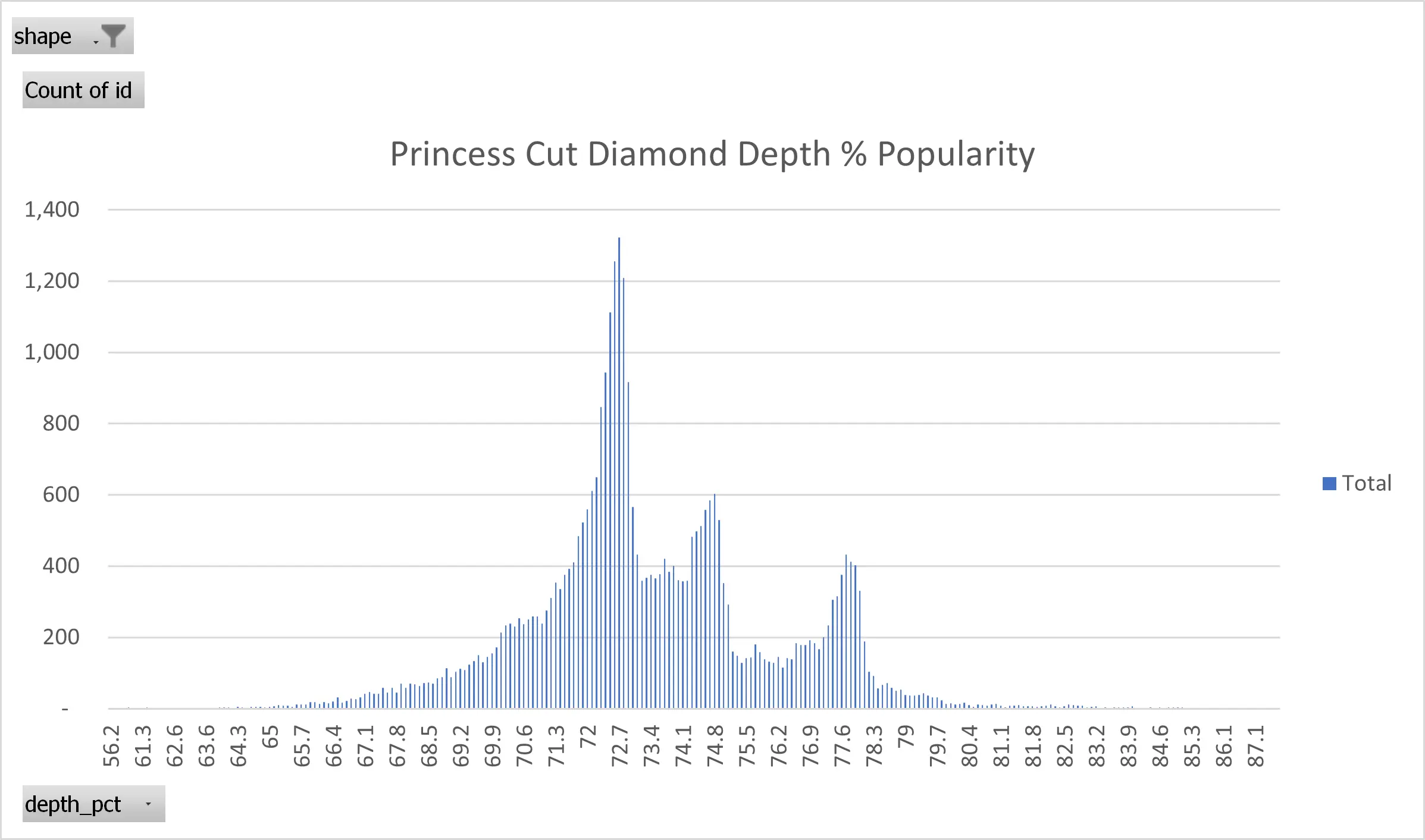
| Depth percentage | About 69% to 78% | 72.7% (smaller peaks at 74.8% and 77.7%) |
| Polish and symmetry | Excellent or Very Good | Choose Excellent |
Best length to width ratio for a princess cut
A princess is usually cut as close to square as possible, so the ideal ratio is 1.00. Any ratio from 1.00 to 1.05 looks square to most people. GIA notes a square princess cannot exceed 1.05, and a rectangular princess is usually no more than 1.25.
Best depth percentage for a princess cut
There is no single ideal depth for a princess. The most common depth is 72.7%, with smaller peaks at 74.8% and 77.7%. A princess carries a lot of weight in its depth. So at the same carat weight, a lower depth in this range faces up larger.
Best table percentage for a princess cut
The table percentage is the width of the flat top facet divided by the width of the diamond. Most princess cuts have a table between 60% and 69%, and 64% and 65% are the most common values.
For more on these two numbers, read how depth and table affect a diamond.
What color and clarity are best for a princess cut?
G and H are the most popular color grades for princess cuts on StoneAlgo. Together they make up about half of the princess cuts that shoppers view. Most people cannot tell near colorless grades (G to J) from colorless grades (D to F) unless the stones sit side by side. Compare the 2.5 carat princess cuts below, from D color to K color.
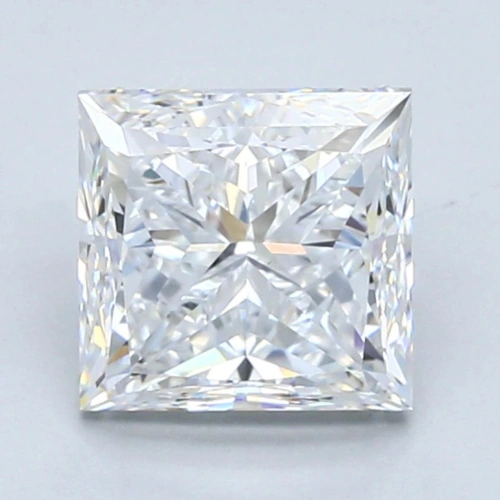
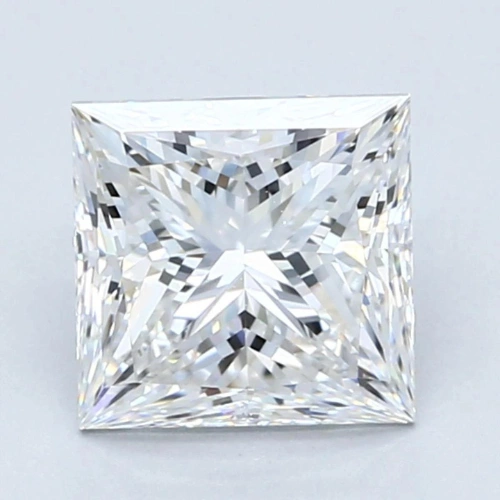
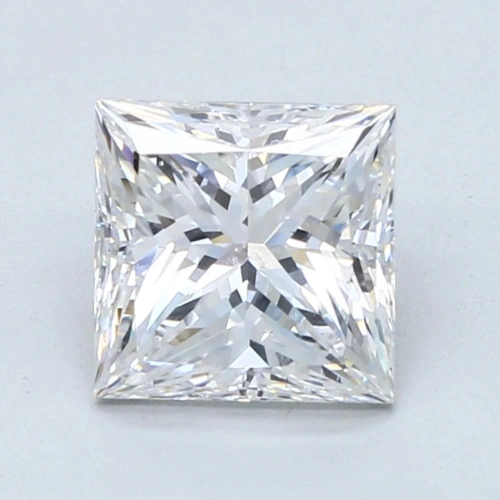
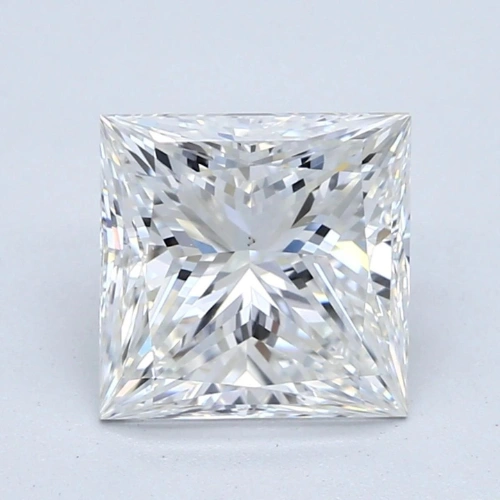
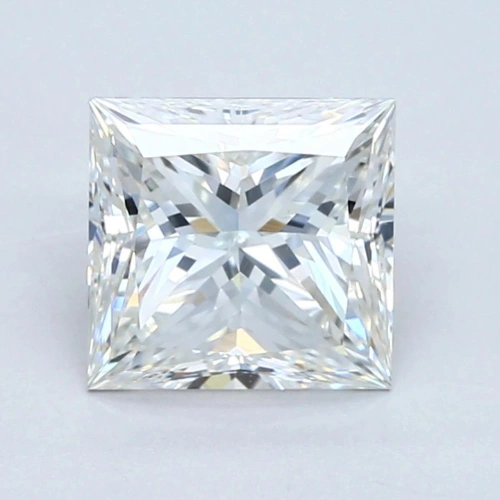
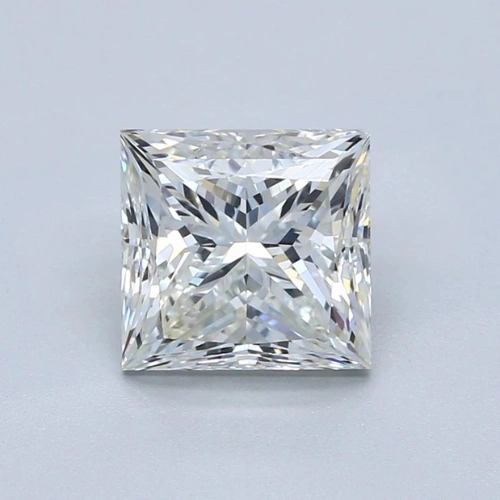
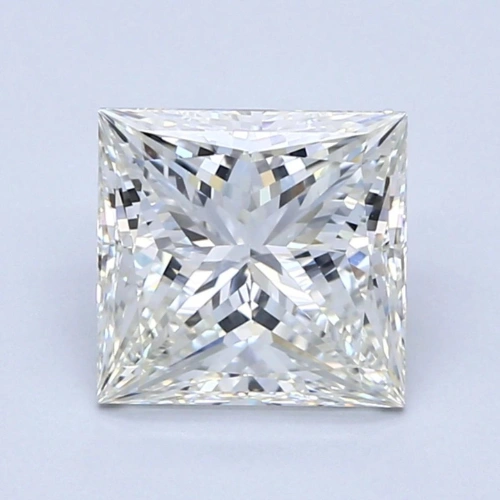
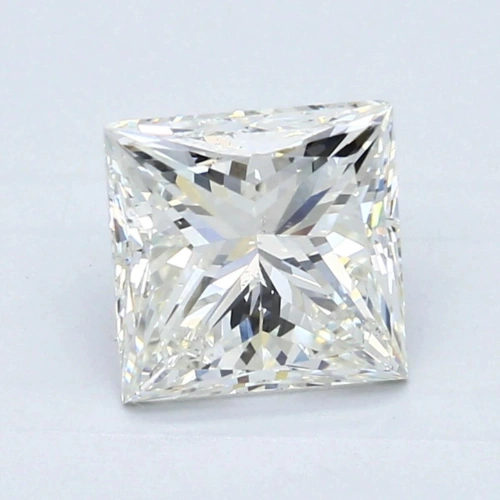
VS1 and VS2 are the most popular clarity grades for princess cuts. They make up 48% of the princess cuts viewed on StoneAlgo. Shoppers pick them to get an eye clean diamond without paying for a flawless grade.
| Grade | Best value for most buyers | Step up if |
|---|---|---|
| Color | G or H | The princess is over 2 carats, or you want a colorless look (D to F) |
| Clarity | VS2 or eye clean SI1 | You cannot confirm the SI1 is eye clean from photos or video |
| Polish and symmetry | Excellent | This is the top grade. Very Good is the lowest we suggest |
How much does a princess cut diamond cost?
In November 2026, a 1 carat natural princess cost about 39% less than a 1 carat natural round on StoneAlgo. These averages cover every color and clarity grade listed, so they move with the grade mix.
| 1 carat diamond, November 12, 2026 | Natural, average | Lab grown, average |
|---|---|---|
| Princess | $2,815 | $555 |
| Round | $4,635 | $534 |
The live table below updates with StoneAlgo's price index.
Princess Cut Diamond Prices
Below are prices for Princess Cut diamonds as of November 16, 2026. Prices are based on StoneAlgo's proprietary diamond price index calculation.
| Carat Weight | Price | Price Per Carat |
|---|---|---|
| 0.5 | $721 | $1,442 |
| 1 | $2,848 | $2,848 |
| 2 | $13,257 | $6,628 |
| 3 | $32,618 | $10,873 |
- 0.5 carat princess cut diamond prices
- 1 carat princess cut diamond prices
- 2 carat princess cut diamond prices
- 3 carat princess cut diamond prices
For a price on one exact set of grades, use the diamond price calculator.
How big is a princess cut diamond?
See the princess cut diamond size chart for the typical mm size of a princess at each carat weight. A princess carries more weight in its depth than most shapes, so it looks a little smaller from above than a round of the same weight. StoneAlgo's visual carat weight shows how big each diamond looks.
How to buy a princess cut diamond
- Decide on square (1.00 to 1.05) or rectangular (above 1.05).
- Search princess cut diamonds with Excellent polish and symmetry and a 60% to 69% table.
- Check the photos for chips or inclusions near the corners.
- Run your top picks through the Diamond Check tool to see the visual carat and a price and quality check.
- Put your finalists side by side in the diamond comparison tool, then choose a setting that protects all four corners.
Frequently asked questions
What depth and table make a princess cut look bright?
Most princess cuts have a table of 60% to 69%, and the most common depth is 72.7%. GIA does not grade princess cut quality, so choose Excellent polish and symmetry and check the sparkle in a photo or video.
Can a princess cut diamond be rectangular?
Yes. Most princess cuts are square, with a ratio of 1.00 to 1.05. A rectangular princess has a higher ratio, usually up to about 1.25.
What are the square shaped diamonds?
The main square shapes are princess (pointed corners, brilliant facets), Asscher (cut corners, step facets), and square versions of the radiant and cushion.
Do princess cut diamonds chip easily?
The pointed corners are the weak spots. Choose V shaped prongs, split prongs or a bezel that covers each corner.
Are princess cut diamonds cheaper than round?
Yes. On November 12, 2026, a 1 carat natural princess averaged $2,815 on StoneAlgo, against $4,635 for a 1 carat natural round.
