


Updated . Published .
Pear Cut Diamond Guide: Ideal Ratio, Table and Depth
Short answer: a pear cut diamond is a teardrop shape, rounded at one end and pointed at the other. For most buyers, the ideal pear has a length to width ratio of 1.50 to 1.65, a table of 57% to 62%, a depth of 61% to 64.5%, Excellent symmetry, G color and a faint bow tie.
- Pear is the sixth most popular diamond shape on StoneAlgo.
- In November 2026, a 1 carat natural pear averaged $3,752 on StoneAlgo, 19% less than a 1 carat round.
- Symmetry matters more in a pear than in most shapes. Choose Excellent.
- Most pears show some dark bow tie. Check photos or video and choose a faint one.
- The point is the weakest spot. Protect it with a V shaped prong or a bezel.
What is a pear cut diamond?
A pear cut (or pear shaped) diamond is a fancy shape that looks like a teardrop. It is rounded at one end and tapers to a point at the other, like a mix of a round and a marquise. Most pears have brilliant facets, so they can sparkle well.
Pear is the sixth most popular shape in StoneAlgo's shopper data, after round, oval, cushion, emerald and radiant. Buyers choose it because it looks classic and unusual at the same time.
Pear cut pros and cons
| Pros | Cons |
|---|---|
| A distinctive shape that stands out in a ring | The point can chip without protection |
| Costs less than a round of the same weight | Most pears show some bow tie |
| A long shape that flatters the finger | Less selection than round, oval or cushion |
| Can be worn point up or point down | Lower color grades can look yellow sooner than in a round |
On November 12, 2026, StoneAlgo listed 11,264 natural 1 carat pears. Search pear cut diamonds from many online jewelers in one place.
What are the ideal proportions for a pear cut diamond?
GIA assigns an overall cut grade to round brilliants only. For a pear, the report gives polish and symmetry grades plus the measurements. Use the ranges below, taken from the pears in StoneAlgo's database.
| Measurement | Where most pears fall | Most common value |
|---|---|---|
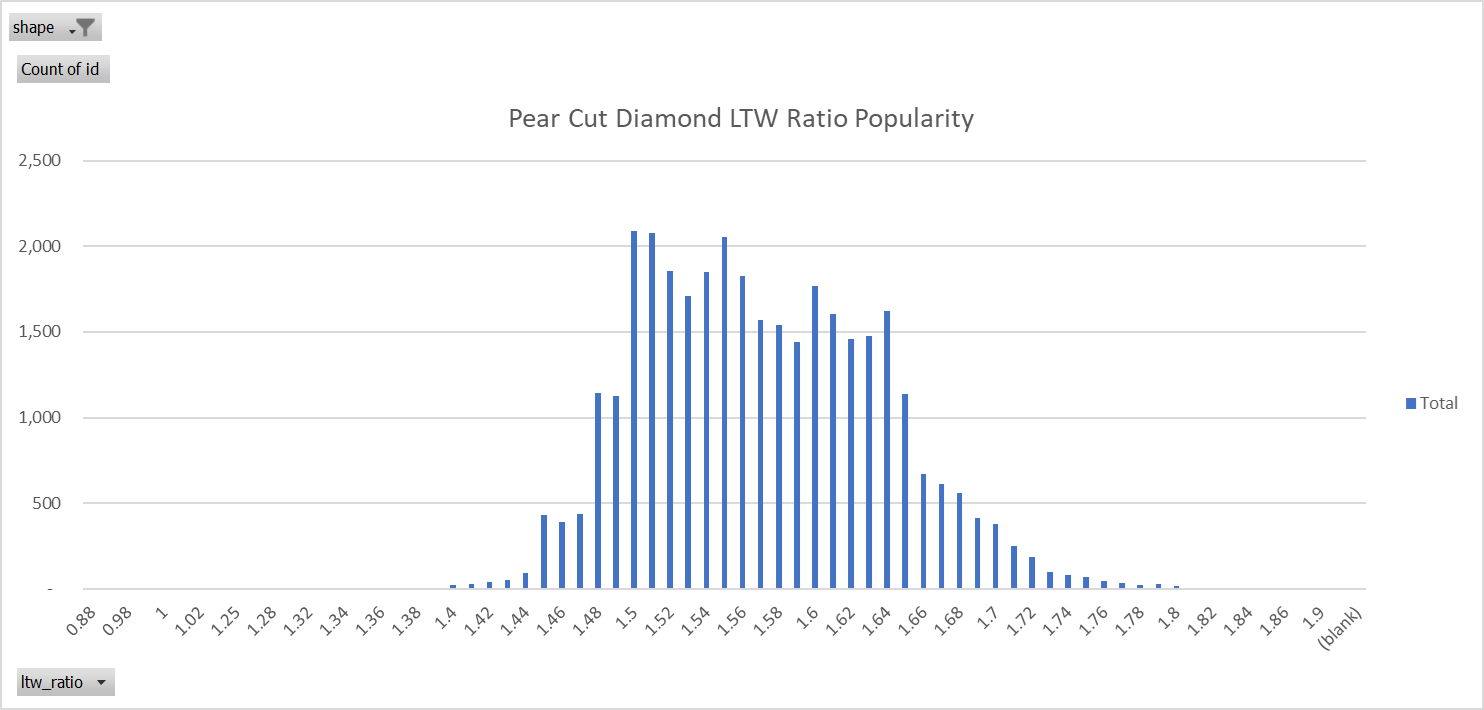
| Length to width ratio | 1.50 to 1.65 | 1.50 |
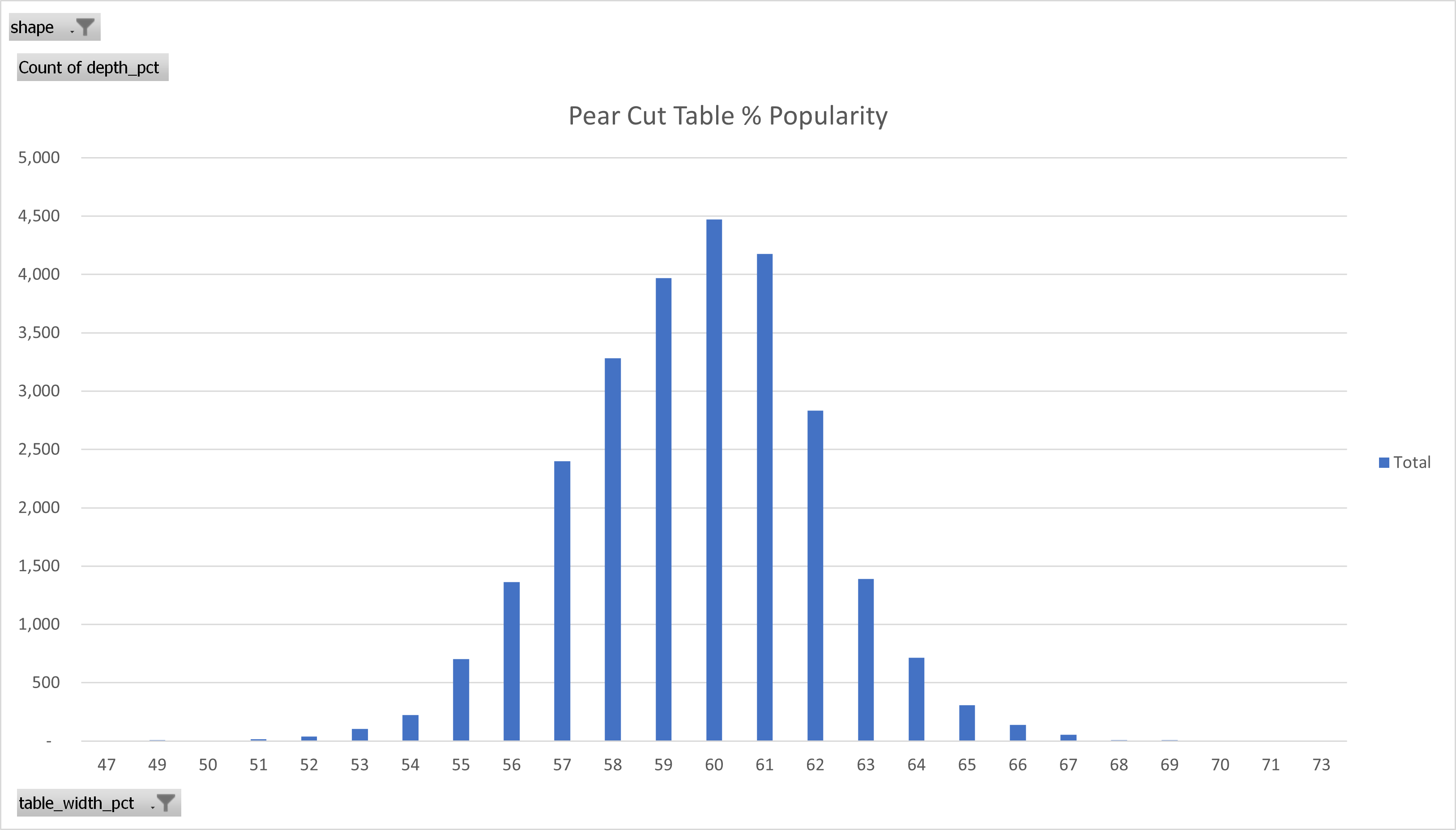
| Table percentage | 57% to 62% | 60% |
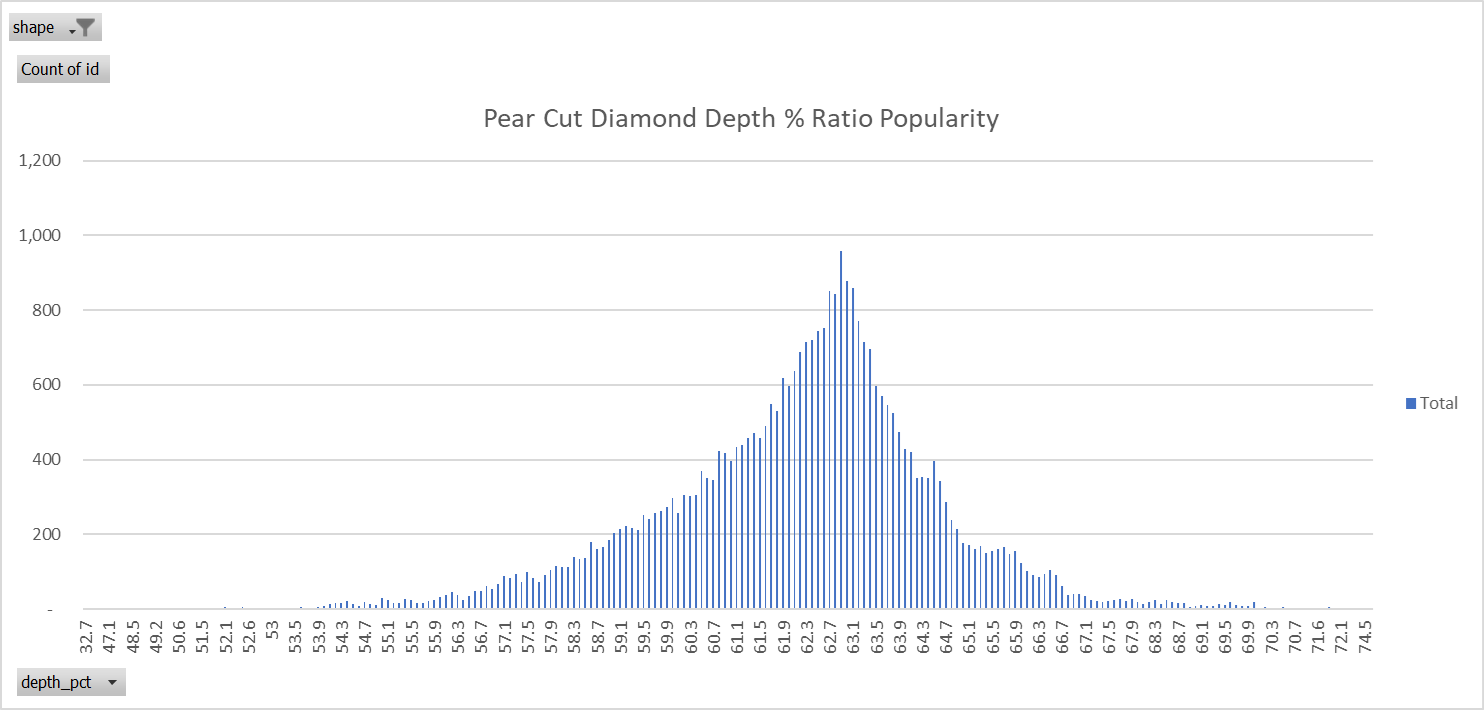
| Depth percentage | 61% to 64.5% | 63% |
| Symmetry | Excellent or Very Good | Choose Excellent |
Best length to width ratio for a pear
The most common pear ratio is 1.50, and most pears fall between 1.50 and 1.65. GIA notes that many experts prefer a range of about 1.50 to 1.75 (GIA's pear shaped diamond guide). A higher ratio gives a longer, slimmer pear.
Pear cut symmetry
Ratio is a matter of taste. Symmetry is a clear quality check. Look at how closely the left half of the pear matches the right half. GIA calls symmetry key to a pear's beauty: the shoulders, the curves and the point should line up on both sides of the center line. Choose an Excellent symmetry grade.
Best depth percentage for a pear
The most common pear depth is 63%. Most shoppers pick depths between 61% and 64.5%, with a steep drop above 64.5%. A deeper pear puts more weight below the girdle, so it looks smaller from above. StoneAlgo's visual carat weight measures that effect for each diamond.
Best table percentage for a pear
Pear table sizes follow a smooth bell curve. The most common table is 60%, and most shoppers pick tables between 57% and 62%. For more on both numbers, read how depth and table affect a diamond.
How do you avoid the bow tie effect in a pear?
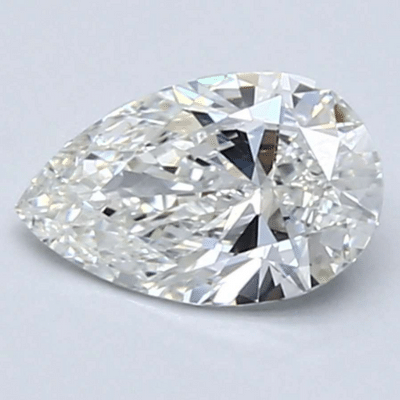
Like ovals, many pears show a dark area across the middle shaped like a bow tie. GIA notes that the bow tie gets darker as the length to width ratio and pavilion angles get more extreme. Some bow tie is normal. Look for a pear where it is faint.
A grading report cannot show the bow tie. Look at photos or a video, ideally from several angles. Below are pears with a clear bow tie.
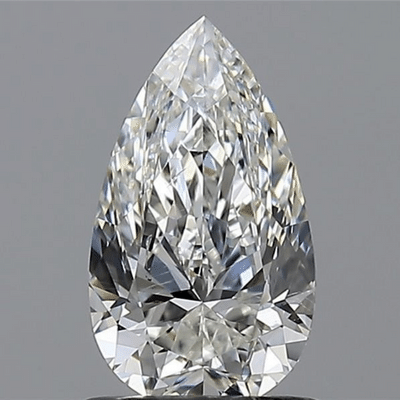
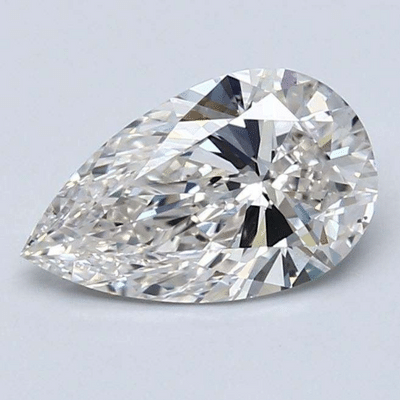
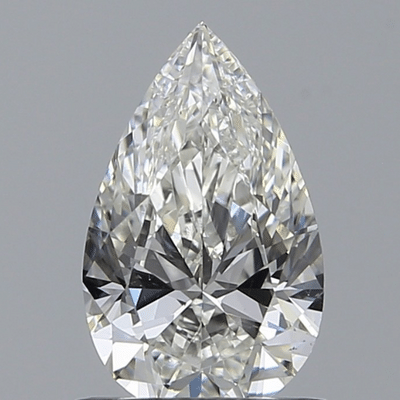
Read the oval cut diamond guide for more examples of the bow tie.
What color and clarity are best for a pear?
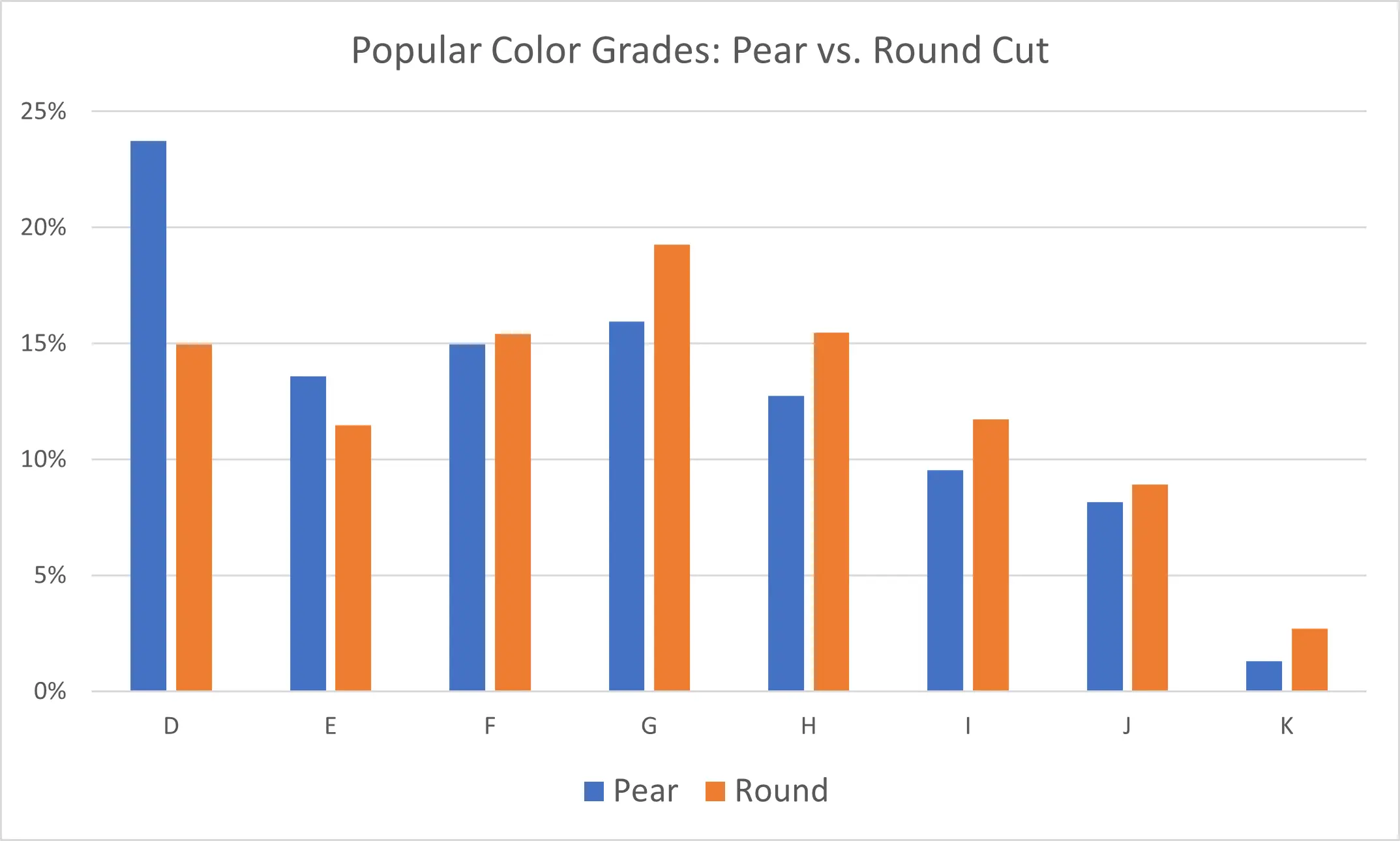
D is the most popular color for pears on StoneAlgo, at about 24% of the pears shoppers pick. G is a distant second at about 16%. Pears can show color more than rounds, because a round's sparkle hides more of the tint. For most buyers, G gives the best value.
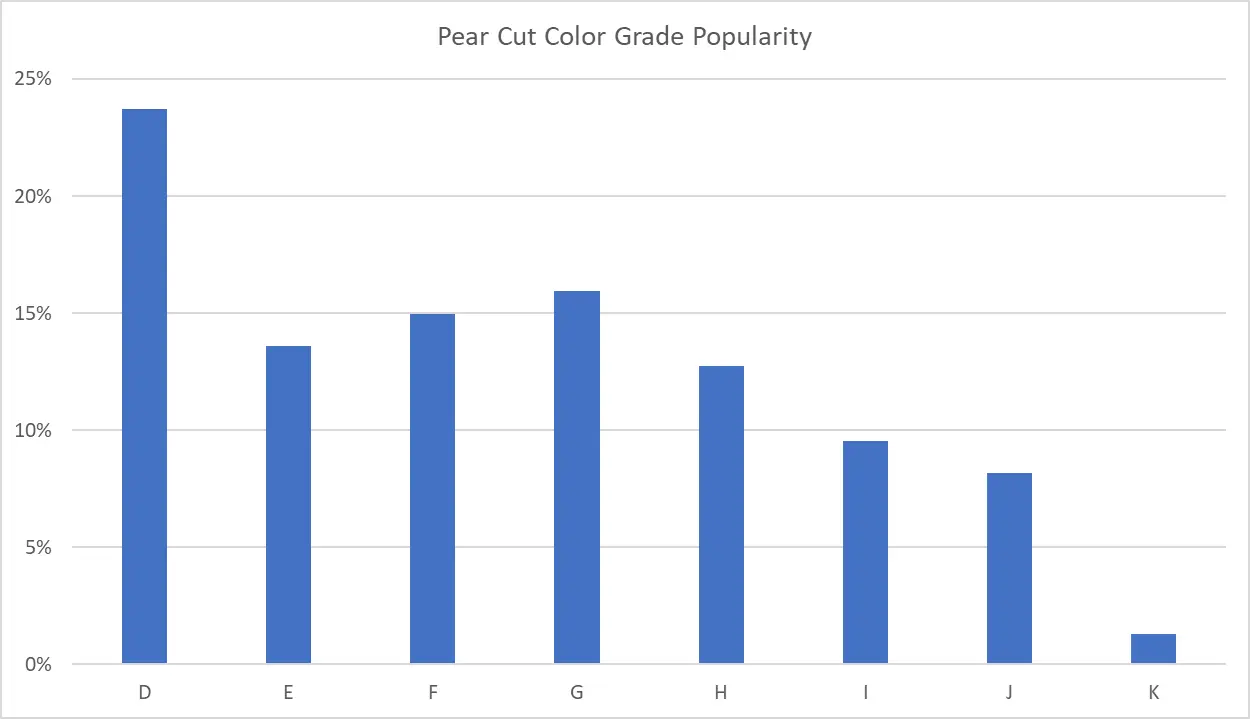
The chart below compares color choices for pears and rounds. For pears, D is the top choice and G comes second. D is far more popular for pears than for rounds.
| Grade | Best value for most buyers | Step up if |
|---|---|---|
| Color | G (avoid I and below in white metal) | You want a colorless look (D to F) |
| Clarity | VS2 or eye clean SI1 | You cannot confirm the SI1 is eye clean from photos or video |
| Symmetry | Excellent | This is the top grade. Very Good is the lowest we suggest |
See how to find eye clean diamonds before you choose an SI1.
How much does a pear cut diamond cost?
In November 2026, a 1 carat natural pear cost about 19% less than a 1 carat natural round on StoneAlgo. These averages cover every color and clarity grade listed, so they move with the grade mix.
| 1 carat diamond, November 12, 2026 | Natural, average | Lab grown, average |
|---|---|---|
| Pear | $3,752 | $593 |
| Round | $4,635 | $534 |
The live table below updates with StoneAlgo's price index.
Pear Cut Diamond Prices
Below are prices for Pear Cut diamonds as of November 16, 2026. Prices are based on StoneAlgo's proprietary diamond price index calculation.
| Carat Weight | Price | Price Per Carat |
|---|---|---|
| 0.5 | $996 | $1,992 |
| 1 | $3,730 | $3,730 |
| 2 | $19,638 | $9,819 |
| 3 | $50,325 | $16,775 |
- 0.5 carat pear cut diamond prices
- 1 carat pear cut diamond prices
- 2 carat pear cut diamond prices
- 3 carat pear cut diamond prices
For a price on one exact set of grades, use the diamond price calculator.
What is the best setting for a pear shaped diamond?
GIA calls the point the most vulnerable part of a pear. A V shaped prong over the point, or a full bezel, protects it. Many settings add two or three more prongs around the rounded end.
The traditional way to wear a pear is with the point toward your fingertips. Some people prefer the point toward the wrist, or a sideways setting.
How big is a pear cut diamond?
See the pear cut diamond size chart for the typical length and width at each carat weight. A long, shallow pear looks bigger from above than a short, deep one of the same weight.
How to buy a pear cut diamond
- Choose your ratio. Most buyers like 1.50 to 1.65.
- Search pear cut diamonds with Excellent symmetry, a 57% to 62% table and a 61% to 64.5% depth.
- Check each photo or video for even shoulders, a faint bow tie and a clean point.
- Run your top picks through the Diamond Check tool to see the visual carat and a price and quality check.
- Put your finalists side by side in the diamond comparison tool, then choose a setting that protects the point.
Frequently asked questions
What is the ideal table and depth for a pear diamond?
Most pears have a table of 57% to 62% and a depth of 61% to 64.5%. The most common values are a 60% table and a 63% depth.
What is the best ratio for a pear cut diamond?
Most pears fall between 1.50 and 1.65, and 1.50 is the most common ratio. GIA notes that many experts prefer about 1.50 to 1.75.
Which way should a pear diamond point?
Traditionally, the point faces your fingertips. Point toward the wrist or sideways is a personal choice.
Are pear cut diamonds cheaper than round?
Yes. On November 12, 2026, a 1 carat natural pear averaged $3,752 on StoneAlgo, against $4,635 for a 1 carat natural round.
